
Advocates Participate in Rally for Medical Research To Educate Lawmakers on Hydrocephalus Research
The Hydrocephalus Association recently brought advocates to Washington, D.C. to participate in the Rally for Medical Research Advocacy Day on Capitol Hill. The event incorporated a diverse group of stakeholders which included doctors, scientists, patients and caregivers to advocate for robust funding for the National Institutes of Health (NIH). Patient and caregiver grassroots advocates from over 5 states attended the event to represent the hydrocephalus community. Amanda Garzon, HA’s Chief Operations Officer, delivered remarks at the opening reception alongside Senator Dick Durbin and NIH Director Dr. Monica M. Bertagnolli. Her message emphasized the importance of the patient voice in shaping policy.
The National Institutes of Health represents the largest funding source for biomedical research in the United States. Additionally, the agency provides the largest stream of federal research dollars to scientists in the hydrocephalus research network, primarily through the National Institute of Neurological Disorder and Stroke (NINDS).
Advocates participated in over 50 meetings with congressional staff and members of Congress to share their personal connections to hydrocephalus and the impact of NIH funding on our community.
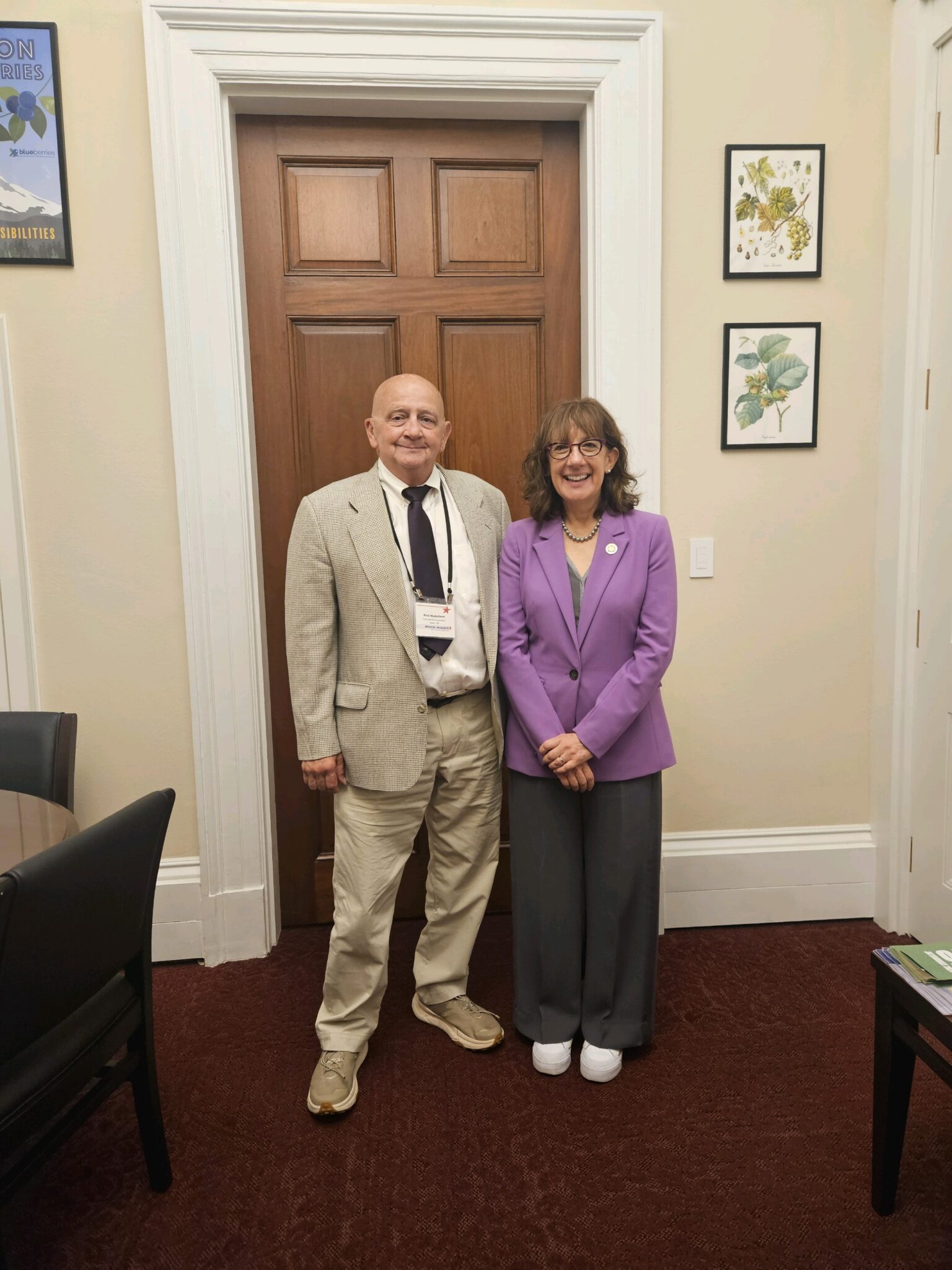 Rich Mulholland, one of the sponsored advocates representing the Hydrocephalus Association, traveled from Oregon to share the story of his normal pressure hydrocephalus (NPH) diagnosis. He is pictured with his member of Congress, Representative Andrea Salinas (OR-06).
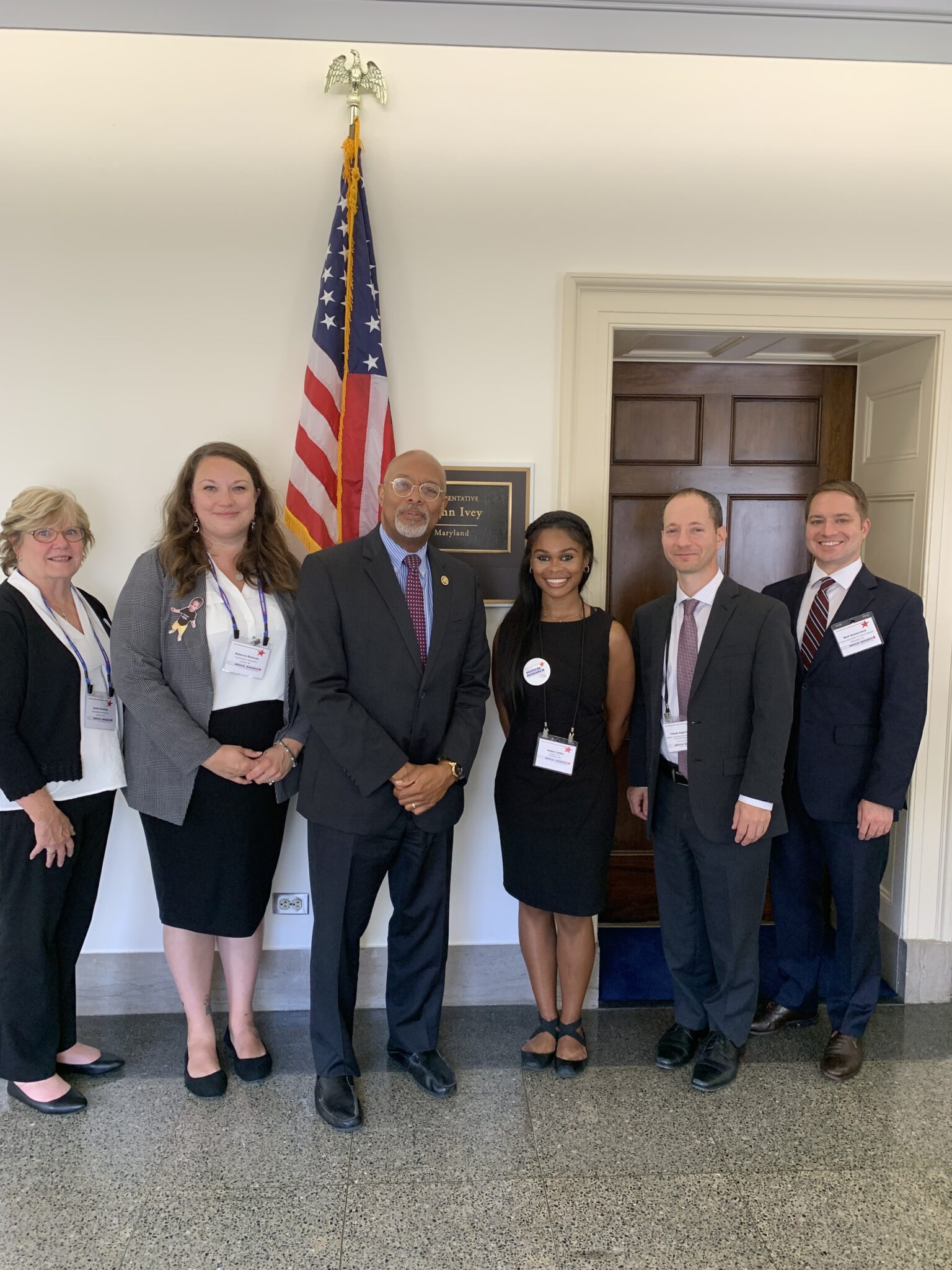 Jackie and Rebecca Mullock, mother and daughter advocates from Maryland, were able to share their families hydrocephalus story with Congressman Glen Ivey (MD-04)
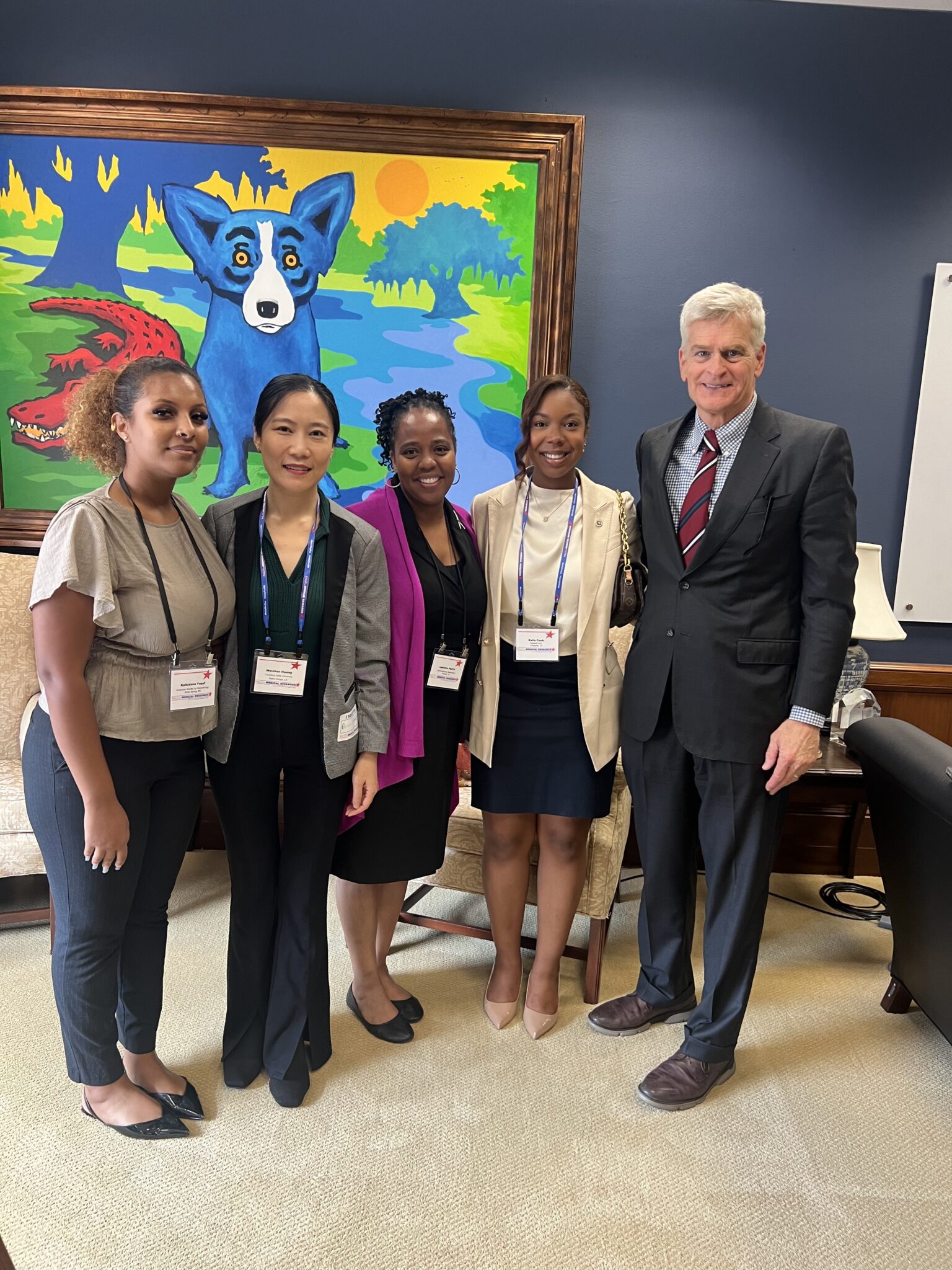
Lakisha Harris, HA’s Support Programs Manager, was able to share the importance of NIH hydrocephalus research with former gastroenterologist, Senator Bill Cassidy (LA).
 The NIH has funded a number of high-impact hydrocephalus research grants in 2024. Recent funding centered on uncovering the various causes of hydrocephalus. Brandon Miller, an investigator at the Medical University of South Carolina (MUSC) in Charleston, was awarded $2.6 million by the NINDS for a project titled “Reversing Inflammatory Macrophage Activation as Treatment for Neonatal Intraventricular Hemorrhage and Hydrocephalus”. The grant will study how intraventricular hemorrhage (when blood bleeds into the brain’s ventricles) alters the normal behavior of the immune system in the brain. By investigating the impact of intraventricular hemorrhage on brain immune cells, the study aims to discover ways to reduce inflammation and the development of hydrocephalus.
Peter Jin, assistant professor of Genetics and Pediatrics at Washington University School of Medicine, was awarded approximately $3.16 million from the NINDS for a project titled “Molecular and cellular characterization of congenital hydrocephalus”. The grant seeks to uncover the large number of congenital hydrocephalus cases that have unknown causes. The project’s resources will be invested in genomic technologies and computational methods to uncover the genetic factors contributing to the development of hydrocephalus.
The timing of the event underscores the current barriers facing the biomedical research community. The FY2024 budget for the National Institutes of Health was set at $47.311 billion, a decrease of $368 million, or 0.8%, from FY2023. This was the first cut in topline spending since 2013.
Scarce funding opportunities and budgetary challenges caused by inflation present a difficult environment for researchers in the public field. Level or decreased funding therefore forces federal agencies to pick and choose between which research opportunities to support. Science with the potential to uncover an eventual cure for hydrocephalus could be left on the table as a result.
Inadequate funding avenues can also dissuade young investigators from entering the public research workforce altogether. If grants are unfunded so are their salaries. They may end up working as researchers for private pharmaceutical companies as a result. Public entities like universities are more likely to invest resources into science for rare and complex conditions compared to the private sector (pharmaceutical companies) which lacks incentives. New medications or treatments for rare diseases offer little financial benefit for companies due to the small patient population of these conditions. If young investigators are pulled out of the public space, there will not be a strong pipeline of future researchers investigating cures for conditions like hydrocephalus.
Congress’ failure to negotiate and pass the 2025 Appropriation bills has had a direct impact on the decisions of the NIH. The National Institute of Neurological Disorder and Stroke recently announced that due to budget uncertainty, they will be operating on a 8% payline for 2025 research applications. This will significantly decrease the amount of grant opportunities for scientists across the country, including ones investigating hydrocephalus.
The Hydrocephalus Association is committed to the continuation of robust federal research funding through avenues like the National Institutes of Health (NIH).